







Featured Services

APL offers team and individual training through in person and online seminars on various topics ranging from, emergency preparedness, policy and procedures, leadership development, recruitment, risk management, ethical standards, accountability, earning trust, and creating positive customer collaborations. We conduct accountability audits of procedures, inventory management, risk and safety, and emergency preparedness. We offer "best practices" executive consulting services for public and private sector agencies and we partner with individuals who are committed to the "SERVIAM" guiding principles.

Blog

Subscribe to our Blog.

Read more

Growth strategies

View, share, and download our PODCAST and Training Videos.

Read more

Services and Capabilities

Click here to view a list of our many customized services.

Read more

Our Latest Work

Our consultants are constantly researching the latest strategies and best practices that meet today's needs. Our teams have been working around the clock to produce professional curriculum and reports for our clients. We have access to subject matter experts across the nation who can provide public service agencies with data driven initiatives, professional training, and accountability standards that reduce risk, maintain transparency, and earn trust. We share our blogs, podcasts, and YouTube vlogs for all of our visitors and we welcome all public servants and future public servants to participate in our initiatives and online events.

Direct To You

Large or small training events brought straight to you.

Executive Consulting

Our professional team offers one on one and team consulting.

Live and Webcast Seminars

Online, mobile, or in person events

What Clients Say

We have partnered with global experts in our field to provide customized services for our clients. Our team is made up of credible individuals who are dedicated to professional development strategies that honor the legacy of our noble vocation. We have written and received thousands of dollars in grant funding for our clients, helped agencies achieve recognition for best practices, and offered executive consulting and training for public servants locally and internationally.

Mike Davis is the founder of Archangel Professional Leadership, established in 2020. The APL team has over 100 years of combined professional public safety service experience.

Mike Davis
Founder CEO

"I could not ask for any better service provided by the professional team at APL, I would highly recommend contacting them for your law enforcement consultant needs." -Chief of Police, City of Dilley TX.; "APL conducted an inventory of three evidence storage areas and one armory storage in a timely and very professional manner." -La Salle County Sheriff

WHAT CLIENTS SAY
View our Testimonials page to hear from our clients

Show Pride in Serving

These are a few of the many products in our shop for profesionals to highlight and share their pride as public servants. Click "Shop" at the top of this page for more APL Guardian products: T-Shirts, Caps, Stickers and more.

Men’s Columbia short sleeve button shirt
Price range: $62.50 through $66.00
Select options This product has multiple variants. The options may be chosen on the product page

Honor the SERVIAM Legacy

Whether your agency is looking for in person training, planning a professional conference, establishing community initiatives, grant writing/management, audits & inventory, change management accountability, data analysis, developing policies, in need of risk/safety or security audit, looking for a specialized threat assessment team, or drafting a strategic plan... We have the collaborative solutions, expertise, and resources to meet the needs of an evolving vocation in an infinitely changing world. Click the button below to send us an email or use messenger. Call us at (210) 951-0130,

Subscribe to Our Blog & Podcasts

Click on the Blog & Podcast tab on the top of our page for more. We welcome all visitors to participate.

Stay the Course: Leadership in the Uncomfortable Unknown

I went through several articles that I had written over the years as well as a few of my recent notes to collect a few anecdotal thoughts that I put into this article.

-Mike Davis, Founder Archangel Professional Leadership

Leadership is often romanticized as clarity, confidence, and direction. But the truth is simpler and harder. Staying the course doesn’t always mean taking the easiest path. In fact, the most meaningful progress often emerges from the uncomfortable spaces: the doubts, the setbacks, and the quiet internal conversations we hold with ourselves.

Mindset: Guarding Your Mental Energy

Every day, leaders fight battles no one else sees battles of discomfort that drain energy, fuel anxiety, and distract from purpose. These internal battles matter. They can take over your day if you allow them to run unchecked. This is why leaders must be intentional about their inner dialogue.  Positive self-talk isn’t cheesy it’s strategic. Snapping back to reality when the mind spirals is a discipline. Acknowledging that challenges are healthy is a form of wisdom.  Real leadership means setting realistic goals after a setback, letting others lift the team when needed, and resetting your mindset so internal momentum is never lost.

The Power of Others

We often fall into the trap of believing leaders must have all the answers. The truth?

Others might have better ideas and that’s a strength, not a threat.  Great leaders create space for contribution, collaboration, and innovation. When the team wins, the leader wins. When the team grows, the mission grows.  This includes one of the most essential responsibilities of leadership: mentorship.

Build your team and remember that a hand up is not a handout. Mentorship is about guidance not micromanagement and certainly not doing someone’s work for them or forcing them to do it your way if they discover better solutions.

When we taught our kids to ride a bike, we didn’t pedal or steer for them. We explained how the bike works, let them practice with training wheels, ran beside them, let them fall a few times, and eventually removed the training wheels so they could ride on their own. Today’s teams are no different. Many grew up in a different technological and cultural era; some of them now have “electric bicycles” we never had. Their tools and opportunities may look different but that’s the point.

Our legacy has nothing to do with controlling how they ride, it is built by giving them the opportunity to go on the journey.  Teamwork doesn’t just help. Teamwork truly makes the dream work because no meaningful vision has ever been achieved alone. That is what takes us further than we ever got on our own.

Growth: The Muscle Metaphor

Growth personal or professional is never comfortable.  Think of it like strengthening a muscle: you strain it, you push to the point just before failure that last rep when everything burns.  Microtears form and it’s in those tears that growth begins.

Rest. Recover. Build again.

Leaders are no different. We grow when we push near our limits, learn from resistance, and come back stronger. We set new goals. We lift a little more weight next time. It’s not the strain that weakens us—it’s the refusal to grow from it.

Passion: Fuel for the Journey

Every leader must eventually answer a defining question, “What is your passion?”

Passion doesn’t eliminate challenges, it gives them meaning. It provides the internal fuel needed when the road feels long and the obstacles loom large. Without passion, leadership becomes mechanical. With passion, leadership becomes unstoppable.

Forward Motion: Don’t Idle in Neutral

You can have encouragement, vision, and motivation but leadership still requires action. “I can motivate your drive, get you to step on the gas, but if you leave the car in neutral, you still won’t go anywhere.” You can rev the engine with self-doubt, hesitation, or fear… but you’ll only burn energy until the car shuts down. Put the car in “drive”, move forward, even if the road is unfamiliar.

Don’t waste your energy fighting mental battles that stall progress. The journey into the unknown will be uncomfortable. But if you maintain your vehicle, your mindset, your habits, your passion, you’ll go farther than you imagined.  You told your team where you want to go, your car is fueled, and your team has mapped out the journey. The road is ahead of you.

All that’s left is to drive.

Legacy, Culture, and the Real Work of Leadership

Building a legacy is more about developing others than showcasing your own accomplishments. You’ve already earned your experience, your title, your story. The next chapter is written through the people you elevate.

The beauty of a shared vision is that it hands every team member a paintbrush. Each person adds detail in their own skillful or creative way. Leaders provide the canvas and the tools but life is not paint-by-numbers.

Even in the most disciplined organizations with strong templates and proven systems, subcultures naturally form. Every team has its own rhythms, strengths, and creative nuances. Human differences shape culture, and good leaders recognize that while structure sets boundaries, empowerment fuels innovation.

Standards, policies, and best practices matter but progress comes from trusting and empowering leadership at every level, allowing culture to remain healthy, vibrant, and rewarding for those ready to step up and grow the industry.

The Reality of Leadership: Wins and Losses

There will be wins.

There will be losses.

The stakes are high, and the unknown is a constant companion.

But that is what makes leadership worth it. That is what makes the wins meaningful, the growth real, and the journey extraordinary.

Change Management Requires Courageous Leaders Who Begin With Their Resignation Letter

In the 2000 film Traffic, two lines stand out as timeless lessons in leadership. The story follows the transition of the Office of National Drug Control Policy as a new administration takes office. In one scene, outgoing drug czar General Ralph Landry (James Brolin) shares a parable with his successor, Robert Wakefield (Michael Douglas):

“When Khrushchev was forced out, he wrote two letters for his successor. The first said, ‘When you get into a situation you can’t escape, open this letter—it will save you.’ The second said, ‘When you face another impossible situation, open this letter.’ Soon enough, the successor opened the first letter: Blame everything on me. It worked. Later, in another crisis, he opened the second letter: Sit down and write two letters.”

This anecdote has been repeated in countless leadership seminars, often as a cautionary tale about blame-shifting. Yet another line from the film carries even greater weight. When Wakefield praises Landry’s service, the General replies: “I’m not sure I made the slightest difference. I tried. I really did.” His words reflect the reality of leaders who preserve the status quo rather than embrace transformation.

The Metaphor of the Resignation Letter

The phrase “great leaders write their resignation letter on day one” is not literal—it is a metaphor for humility, service, and succession. Effective change leaders recognize that their tenure is temporary. Their mission is not self-preservation but building resilient systems and developing people so the organization thrives long after they are gone.

Leadership and courage are deeply intertwined. Courage enables leaders to take bold, principled decisions, navigate uncertainty, and inspire their teams, while also fostering a culture of trust, innovation, and resilience. It is the opportunity to face challenges, make difficult choices, and take calculated risks for the long-term benefit of the organization.

When leaders inherit organizations plagued by low trust, poor performance, inadequate resources, or missions beyond current capacity, their first responsibility is a comprehensive needs assessment. From there, they must set attainable goals, address gaps, and take ownership of both past shortcomings and future challenges. Blaming predecessors is easy; true leadership lies in accountability, moral courage, and strategic planning.

Courage in the Face of Uncertainty

Change leaders must accept that their role is precarious. They may be “fired” for failures rooted in organizational history or circumstances beyond their control. Yet courageous leaders do not fear failure—they embrace it as part of growth. Leaders can choose to view failure as a learning opportunity, which builds resilience for both themselves and their teams.

Courage is vital for making decisions that may be unpopular but are necessary for the organization’s long-term success. This can include terminating a failing project, making personnel changes, or making tough calls that disappoint some team members.

By modeling courage through actions like admitting mistakes, showing vulnerability, and having tough conversations, leaders build trust and psychological safety. This empowers team members to take risks and share their own ideas without fear of judgment.

Preparedness, resource allocation, calculated risk-taking, and precision are the hallmarks of resilient leadership. Courageous leaders are not afraid to challenge the status quo, driving innovation and adaptation in dynamic environments. This willingness to take risks provides a sense of security for the team and encourages them to aim for higher goals.

Beyond Titles: The Difference Between Good and Great

Leaders who pursue rank and salary without purpose inevitably leave behind organizational collateral damage. Competent leaders may restore basic standards and maintain “business as usual.” But great leaders go further: they challenge themselves and their teams to innovate, explore uncharted opportunities, and set new benchmarks for excellence.

Courageous leaders lead by example, inspiring their teams to embrace challenging visions and strive for excellence. They help their teams navigate uncertainty with confidence and resilience. Intellectually, they have the courage to question assumptions and consider diverse perspectives, which spurs innovation.

Stagnant leadership drives away top performers; visionary leadership inspires them to stay and grow. Speaking truth to power and advocating for change—even when difficult or controversial—distinguishes leaders who merely manage from those who transform.

The Conductor’s Role

Great leaders ensure that every member of the organization understands the importance of their role. They foster energy, growth, and succession planning that rewards innovation, leverages technology, and strengthens trust.

Communicating openly about challenges ahead helps build trust and allows the team to prepare for what is to come. Like conductors of an orchestra, courageous leaders place individuals in positions where their talents harmonize—each person capable not only of playing their own part but of supporting their partners when needed.

The Legacy of Courageous Leadership

When a great change leader departs, they leave behind more than improved systems—they leave behind empowered people. They take pride in knowing they made a difference by investing in growth, embracing risk, and building trust.

Their legacy is not fear of failure but confidence in challenge, precision, and dedication to mission success. Moral courage—standing up for what is right and upholding ethical standards even under pressure—builds credibility and trust with stakeholders. Ultimately, courageous leaders leave the organization stronger than they found it, but more importantly, they leave a team prepared to carry the vision forward.

Leadership Checkups: What’s Your Diagnosis?

In medicine, a diagnosis is “the identification of the nature of an illness by examining the symptoms.” What if we applied that same principle to leadership?

Leadership isn’t static. The environment changes. The workplace evolves. The workforce transforms. Yet too often, leaders cling to a rigid, one-size-fits-most approach. What worked in your last role—or even last year—might not work today. That’s why good leaders get checkups.

Check the Leadership Forecast

Think of it like checking the weather. What’s the climate in your organization? Cloudy with a chance of burnout? High winds of conflict? A storm of low morale, accountability gaps, or policy-practice disconnects?

If you’re feeling off, frustrated, or ineffective, you might be experiencing what I call “acute leadership illness.” It’s not a clinical condition, but it sure feels real. Symptoms include:

  • Reverting to the hammer-and-nail approach
  • Questioning your leadership style or your team’s followership
  • Feeling defensive about your competence or credibility
  • Wondering, “Why isn’t this working anymore?”

It’s time for a checkup.

Emotional Intelligence: Has Yours Shifted?

Environmental stressors can impact your emotional intelligence. Self-assessment tools can help you recalibrate. But don’t stop there—talk to a mentor. Not someone who flatters you, but someone who tells it like it is. Someone you’re willing to hear it from.

Are You Still Using the Right Tools?

We all have our go-to leadership tools. But when we rely too heavily on what’s familiar, we risk missing better solutions. If your team is telling you there’s a drill that works better than your trusty screwdriver, are you listening?

Leadership checkups help us reflect: Are we adapting, or just defaulting?

Leadership at Every Level

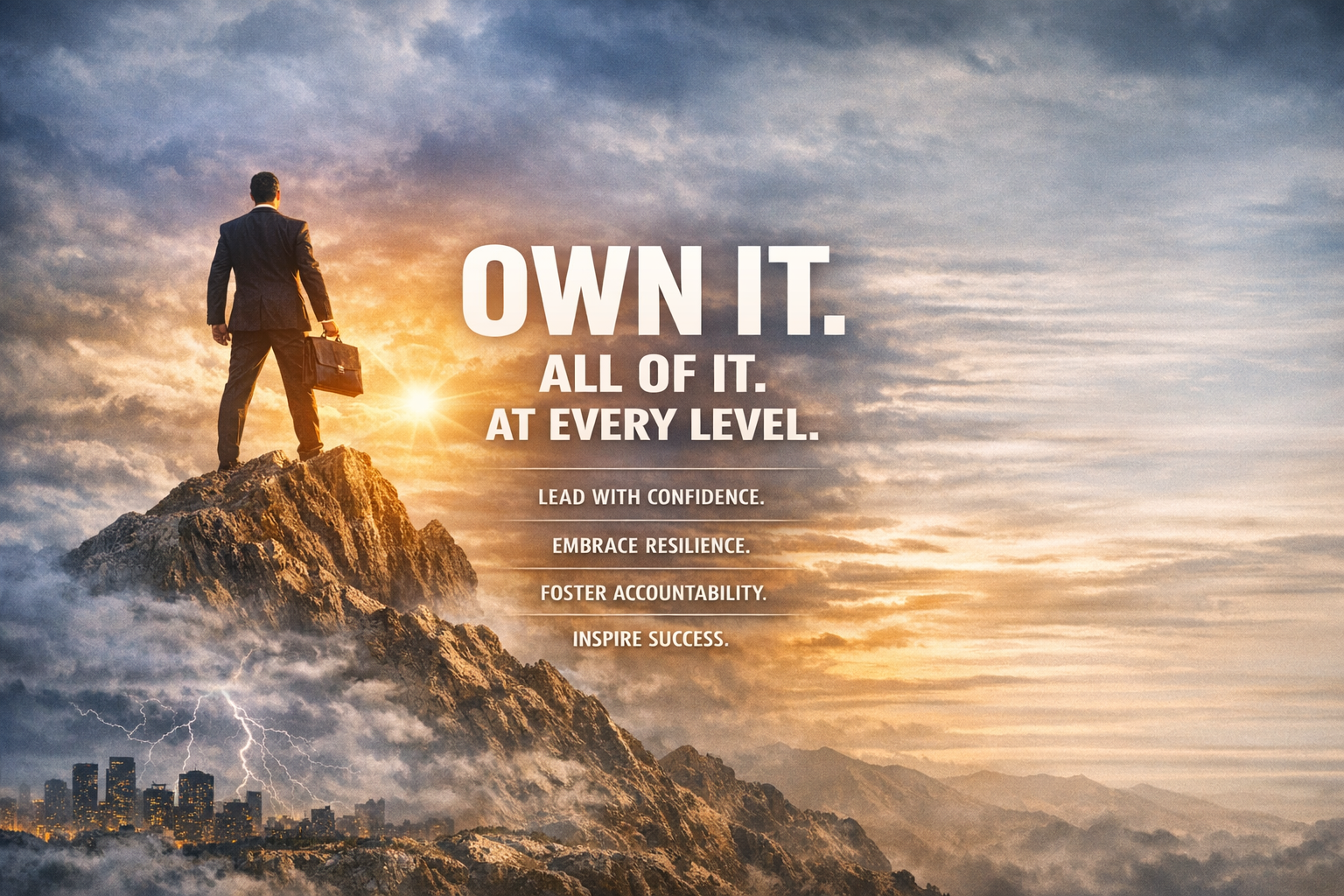
If we expect innovation from our teams, we must model it ourselves. Empower your people to lead in their lanes. Encourage calculated risks. Create space for ownership. Then ask yourself: Am I doing the same?

And if you’ve been “infected” with acute leadership illness, own it. Reset. Inoculate. Build a culture where your team can respectfully call you out when needed. That’s not weakness—it’s strength.

From Short-Term Wins to Long-Term Legacy

Leadership isn’t about being irreplaceable. It’s about being impactful. Do you want to be remembered as the one no one could replace—or the one who empowered others to surpass you?

Legacy is built on empowerment, not ego. It’s measured by the culture you leave behind, not the trophies you take with you.

Your Leadership R&D Lab

Think of leadership checkups as your personal research and development lab. When something doesn’t go as planned, ask: “Why didn’t we get the outcome we expected?” instead of “Why didn’t I?”

That shift from “I” to “we” unlocks collaboration, creativity, and confidence. You still hold the authority—but now you have more options, more insight, and more buy-in.

Stay Curious, Stay Current

The climate is always changing—technology, customer needs, team dynamics. Your core leadership principles still matter, but they must evolve. Keep learning. Refresh your tools. Revisit the ones you rarely use. And most importantly, stay self-aware.

Your Leadership Checkup Checklist:

  • Reflect on your emotional intelligence
  • Seek honest feedback from mentors
  • Reevaluate your leadership tools
  • Empower innovation at every level
  • Shift from short-term wins to long-term culture
  • Ask “we” questions, not just “I” questions
  • Stay open to change, growth, and recalibration

Leadership isn’t a destination—it’s a lifelong practice. So ask yourself: When was your last checkup?

What’s your diagnosis?

Back To Top