

The Leaders Legacy APL Episode 4
APLGuardian · The Leaders Legacy APL Episode 4
In Episode 4 we meet two noble public servants, LT. Tina Vitacco and her husband SGT. (Ret.) Tom Vitacco to discuss professional legacy, wellness, leadership, and what inspires them to serve. Starting public service at 18 years old as a clerk and police dispatcher, Tina rose through the ranks facing a series of challenges along the way. Tom was a young musician looking for a new challenge and he decided he wanted to give policing a try. It was the best decision he ever made. Watch and listen as these two Guardians tell an inspiring story about public service and how they have served their community for almost 60 combined years.
Podcast: Play in new window | Download

Administration Vs Everyone Else
Dismantling the Supervisors Toxic Right of Passage
November 28, 2020 by Mike Davis – Founder Archangel Professional Leadership
Statements like, “Try not to forget where you came from” or “Don’t forget about the little guys” are usually the first things new supervisors hear along with words of congratulations and a flat toned “good luck, you are going to need it” These statements come from their peers and people they generally formed friendships with when they were line workers. When being welcomed to the supervisory role the administration uses statements like, “welcome to the team” and “welcome aboard” as if they are joining a whole new organization. In many cases, there seems to be a clear division of the organization between administrators and line workers. As the new supervisor comes to the realization that they are making a transition from the role of line worker to administrator there is a time period in which the new supervisor must make a decision. ‘What was I thinking? I hated the way my old boss treated me.”
The new supervisor will find him or herself having a series of internal conversations during a transitional period that can cause a type of identity crisis. While the new supervisor often wants to be true to the line workers on the team and an agent of positive change for the organization as a whole, every organization has its own culture. There may be problems with the leadership on the top tier(s) of the organization or within the structural tiers depending on the size of the organization and a series of other factors.
One major problem with many organizations is the division of administration vs everyone else. If an organization has a “do as I say not as I do” or “because I am the boss and I said so” or “I can fire you anytime I feel like” supervisory style then the culture is what I call a “Right of Passage Authoritarian Style” of supervision. Why would anyone want to be in that role unless the job is building nuclear bombs? Perhaps it’s the money, benefits, or simply earning the right to be an authoritarian “A-hole” who gets to “boss everyone around.” If the new supervisor wants to be the latter then congratulations on the promotion A-hole you don’t need to read the rest of this article.
Unfortunately, this toxic Right of Passage Authoritarian Style takes time to dismantle because it is handed down as people promote up and they embrace the “if you can’t beat them join them” attitude. It creates a culture and a divide between the administration in which subordinates actually fear their supervisors. If line workers are not exposed to any other leadership methods then they might actually believe that this is the best way to supervise. Lineworkers actually buy into it or reject it making statements like, “I can’t wait to be in charge so I can tell others how to do their job” or the opposite, “I’m never going to be like my jerk of a boss when I promote.” At some point line workers promote and even though some of them never intend to become part of this toxic culture, they don’t know any better and they begin to solve problems the same way they knew their old bosses solved them. Not only that but when they serve in the new role they come to find out that other administrators have expectations of them and they want them to be “team players.” They may have been part of this culture for an even longer time and they rule through intimidation because it works for them. So, what does the new supervisor do to dismantle this culture?
It is the small things that count. Most organizations have a divide between administration and line workers due to lack of communication and by selfishly taking credit for the work of others. There is no need to tell people how to do their jobs, it’s often a matter of telling them what needs to be done and allowing them to do it while mentoring and publicly recognizing their good work. The first task of the new supervisor is to recognize the toxic leaders and remaining black and white around them. The venom that toxic supervisors use in gaining control and compliance is summed up in one simple word, “emotion.” By standing firm around these toxic peers they might believe that the new supervisor is just rigid enough not to allow them to use their venomous tactics to influence or to intimidate the new supervisor. When you remove their ability to manipulate emotion and you focus on work you don’t undermine them, you ignore it, you remain focused on people and work and they tend to stay in their own lane. Over time the new supervisor will gain attention for showing measurable team performance. If they maintain clear lines of communication with their subordinates, mentor future leaders, and offer recognition at all levels by problem-solving in use of various professional leadership methods they will draw attention. At times unwanted attention in the form of emotion brought on by the toxic leaders who become jealous that a new supervisor is showing better performance than they are.
It’s a tough decision to make during a transition period but the new supervisor needs to invest in leadership training, read everything leadership, and know that there are other people who have succeeded in solving similar problems by using proven professional methods. The new supervisor needs to commit to being someone worth following without the use of emotion, manipulation, threats, and they need to walk the walk and talk the talk. It is a journey worth taking and the new supervisor can actually affect change in a culture that blends administration with line workers to develop leadership and performance at every level. Mentorship will be a constant task for the new supervisor. It takes courage and time but even toxic leaders can measure success through performance and if the new supervisor’s performance outweighs the toxic leader, the toxic leaders may need to change their style or leave before they are singled out for their failures.
I need to be clear that this decision could be risky but it is well worth the challenge. Good leaders have been fired, quit their jobs, and unfortunately, some organizations are so toxic that the culture continues on. So, when the opportunity presents itself to promote and the line workers are congratulating you, I say in a sincere and motivating voice “Good luck!” You will have an internal conversation to remind yourself why you are there and tell yourself that you won’t forget where you came from, you will not forget about the little guys, you will treat others better than the way you were treated, you will train, you will read, you will mentor, you will walk the walk, and you will recognize them as a team in one organization.
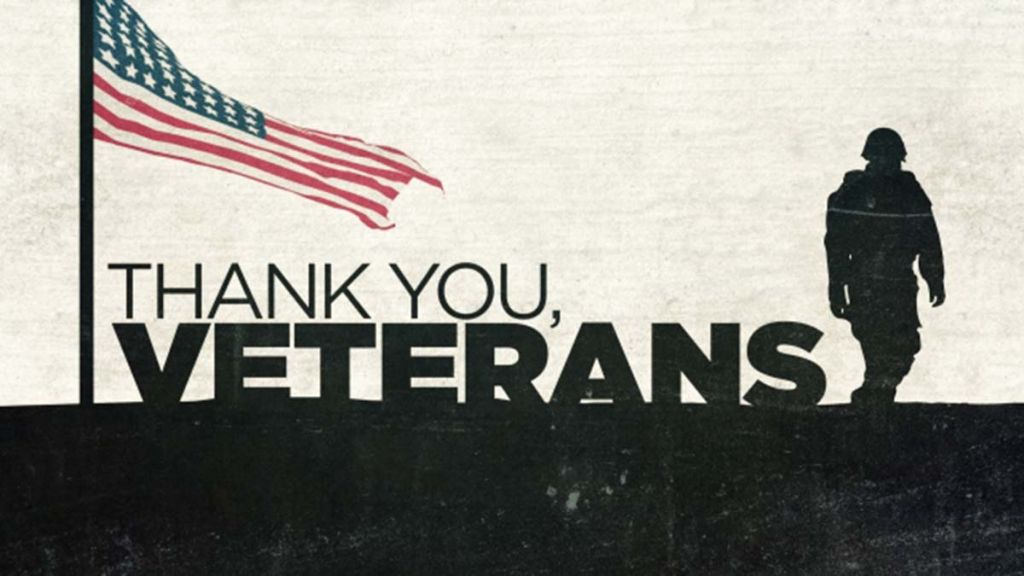
We Honor Our Nations Veterans
November 11th is Veterans Day which is very important to us. It is a day of unity in which all Americans should stand together to celebrate and honor all Veterans who serve and who have served our nation across the globe. Our nation’s guardians have secured our freedoms in times of war and they ensure peace by standing ready to guard our nation. These men and women deserve recognition, respect, and firm appreciation for their dedication and service to others. We wish to thank them and their families for their commitment to answer the Guardians call, “SERVIAM.” We pray for those who have lost loved ones in the armed services. If you stand united to support our nation’s Veterans, Thank You. If you are a family member of a Veteran, Thank You.
Most importantly if you are a Veteran, We Honor You, We Recognize You, We Respect You, We Appreciate You, and We Thank You, everyday…
The Leaders Legacy APL Episode 3
APLGuardian · The Leaders Legacy APL Episode 3
In this continuing series of The Leaders Legacy, we speak with The City of Shavano Park Fire Department Chief, Darrell Dover. Join us as we talk about leadership challenges and how this Guardian hopes to inspire the next generation of professional public servants to embrace the concept of SERVIAM. Be sure to follow us and comment on our blog.
Podcast: Play in new window | Download

We Are Like Family
Are Public Servants honoring the words “brother” and “sister” when they see each other?
I grew up an only child and I came to rely heavily on my neighborhood and school friends to be my “brothers” and “sisters” when I was growing up. Many of them had siblings and I observed them through their ups and downs as they had arguments or disagreements and they held one another accountable. I often heard the proverbial, “If you do that, I’m going to tell mom and dad!” or the “Be careful, I did the same thing when I was your age and I broke my arm!”
Siblings earn trust in one another and they share their life experiences in working cooperatively under the guidance of “the household rules” and other boundaries set by their parents. For those who grew up an only child such as myself, we often formed close relationships with our friends and may have even been seen as an extended “member of the family.” We even respected the rules set by our friend’s parents. I recall the experience of being corrected for my misbehavior a few times while under the watchful eye of my friend’s parents. Families share love and empathy in forming special bonds and they provide care for one another when they become ill. They follow the household rules and they cooperatively form the basis for organizational operations in completing daily tasks. Growing up I had the privilege and opportunity to attend a high school that was rich in culture, discipline, and tradition. We formed lifelong relationships with our classmates based on faith, scholarship, leadership, and moral character. We refer to our class alumnus as “brothers.”
I am a flawed human being who has made mistakes and I have even made poor choices in living my life, but having a great family and friends has guided me to a life of public service. My family has grown exponentially and I am proud to be a part of it. This vocation is often referred to as having a family culture. We look to protect our fellow Guardians and we respect the rules of our chosen trade. We are no longer children and the rules of the house are now set by those we serve. Public servants form bonds and they honor the rich traditions, discipline, scholarship, leadership, and moral character of their vocation. We are human and we make mistakes and sometimes we make poor choices. We grow together each day holding ourselves and other members of our family accountable, all while mentoring and taking care of one another.
We need to keep our family healthy and we must have a conversation with our “brothers” and our “sisters” in public service just as siblings do in setting expectations and the household standards. If we are going to call each other “brother” and “sister” then we need to have some tough conversations sooner rather than later on the topic of moral courage if we want to be a family that honors trust and community respect. Robert F. Kennedy said, “Few men are willing to brave the disapproval of their fellows, the censure of their colleagues, the wrath of their society. Moral courage is a rarer commodity than bravery in battle or great intelligence. Yet it is the one essential, vital quality of those who seek to change a world which yields most painfully to change.” Our family is courageous and moral courage needs to be modeled by each member, especially in our leaders. That means it must be reflected in our lives both on duty and off duty.
If we do not have difficult conversations with our public safety family it could be uncomfortable later in our career when we are asked by a family member to do something that could pose an ethical dilemma. It should start something like this, “You are worth all of my strength and energy and I promise to fight beside you if you need me. I will bring you home at the end of every day and I ask that you do the same for me. I will go through a door with you to face evil if called to do so but make no mistake, I will never lie for you. So as my brother or sister I’m asking you to never ask me to lie for you. I will never sacrifice my ethical integrity and I will hold you accountable as I expect you to hold me accountable if ever needed. We will make mistakes in this career field and I’m willing to tell mom and dad if you do something wrong because in our line of work mom and dad are the members of the community we swore to serve and their trust is fragile and I don’t want to break that.”
If we are going to refer to our co-workers as a family than we need to choose carefully who the leaders of those families are and if their guidance honors the ethical code of our vocation. There may be cases in which we need to leave a toxic family, remove individuals who are toxic from our family, and move on. If we are asked to be “team players” and asked if we “would choose them over us” then the answer should be that we are team players only if the team is one made of ethical leaders and not liars. We are all in the people business and “them” is the people we swore an oath to serve.
If we are family then we also need to look out for the wellness of our brothers and sisters. If we see public servants being damaged by stress, PTSD, emotional trauma, illness, and all the other negative effects that we know are common in this career field then we need to intervene and help each other. When we see our family become ill emotionally and/or physically, we need to take care of them like family. We often do more for our own children, brothers, and sisters than we do for our co-workers yet we call our co-workers “brother” and “sister.” If they are family then we need to honor those titles if we really mean what we say. So many members of public service retire and live a short lifespan after retirement. They become physically ill and develop horrible diseases, PTSD, depression, substance use disorders, and other debilitating illnesses and we have no aftercare for these heroes. We work amongst noble Guardians and they deserve the right to live long and happy lives. We need to check on them regularly as we would a brother and sister. Just because they retire doesn’t mean they are no longer a part of our family.
We have our ups and downs; we laugh together and we feel pain together. I am not afraid to tell you that I love you my brothers and sisters and I care about you. I thank you for protecting my family, my child, and my community. Thank you for honoring our vocation with leadership, compassion, and nobility. We are a growing family, we care for one another, and we are proud of what we do in service to others. If you are a noble Guardian please join our family and we will welcome you as a brother and or sister. SERVIAM
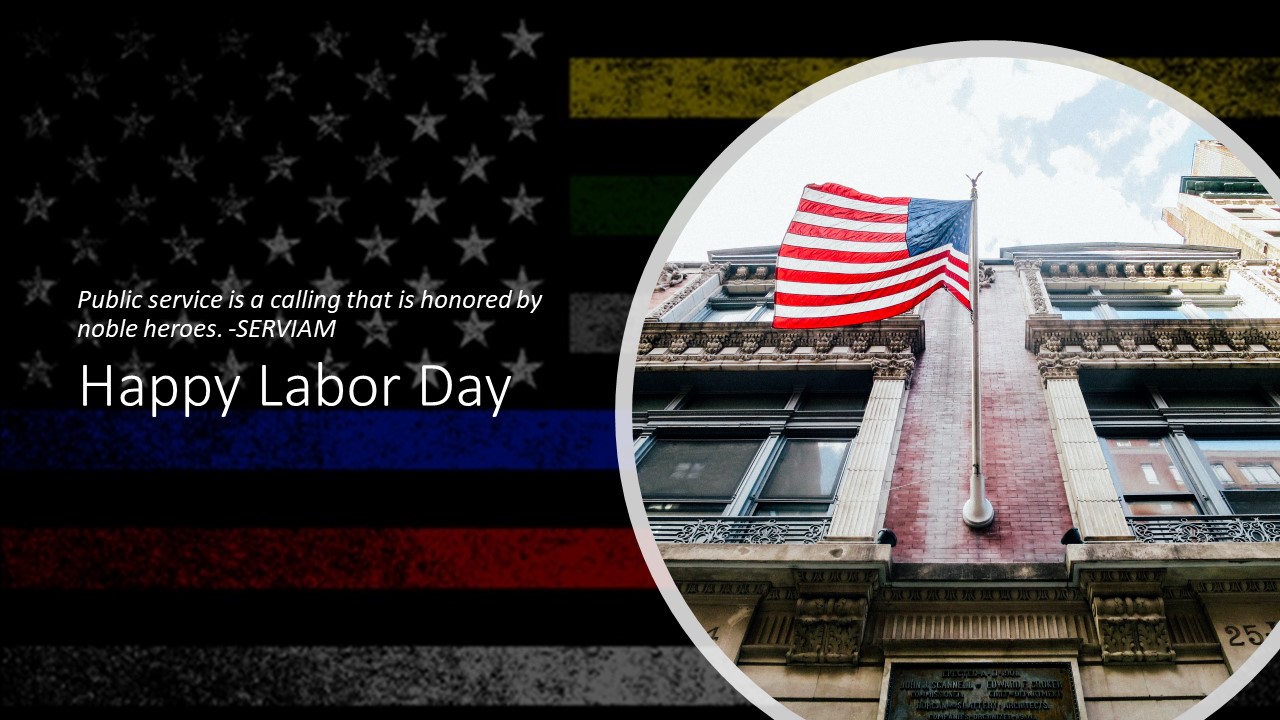
Labor Day
I would like to wish all of our fellow Guardians in public service a very appreciative and happy Labor Day. Your public service honors the American laborer. You guard and ensure our freedoms; heal and treat our sick; your voices answer the calls; you partner with other guardians and collaborate with those you serve; you educate at every opportunity to build and maintain trust; you perpetually strive to improve your trade by adapting, innovating, mentoring, training, and always improving yourself as well as others; you enforce rules and laws you have been trusted with by being fundamentally fair and just; ethical, empathetic, compassionate and of good character; you have inner and outer strengths to remain balanced in both your professional and personal life; you remain humble and professional; and when called to do so you stand ready to run toward the fight, confident in your skills ready to guard those you are sworn to protect.
– Thank You. SERVIAM
The Leaders Legacy EP2
In our second episode of the Leaders Legacy, we speak to recently retired Major Diego Anselmo of the Charlotte-Mecklenburg Police Department and the founder of www.immigrantoutreachsolutions.com. Join us as we talk about leadership, mentorship, servant leadership, and what inspired this Guardian to embrace SERVIAM for over thirty years of public service.
APLGuardian · The Leaders Legacy APL Episode 2
Podcast: Play in new window | Download

Career Day
When I was a child, we had Career Day and we spent a week learning about various vocations. We would go on field trips to the Fire Department, we would have police officers visit along with military recruiters, doctors, professors, architects, and parents of our classmates who stopped in to speak with us. We wrote papers titled, “What I want to be when I grow up” and our parents spoke to us about wanting us to achieve anything we set our minds to. So many of the vocations we explored as children were public service-oriented and even the Halloween and child play costumes we wore as kids put us in those roles (police, fire, nurse, doctor, etc.).
A few years ago, I was asked by my sons’ third-grade teacher to participate in a career day event that was set to take place after school. I was excited to participate and I gladly volunteered to talk about my chosen vocation. The setup was very unique in that all of the participants were given a card with a classroom number on it. I saw a Detective, a parent who served in the military, and a paramedic among some of the parents I knew personally who had been set up in adjoining classrooms to my assigned room. We had several other parents wearing various uniforms and professional attire who were participating. We all met the school principal in the library and were told that our names and vocation would be posted on a card outside of our assigned numbered classroom. At a designated time, hundreds of parents would walk with their children through the hallways of the school and they would select which rooms they wanted their child to enter. We were instructed not to ask any of the students to come into the classroom and to allow the parent to select which classroom they wanted their child to enter. I brought all kinds of swag with me to hand out and I had a really cool PowerPoint and even an activity for kids to participate in. At the time I was working as a Police Academy Supervisor.
When the event started, I saw hundreds of parents, many that I knew from school events who entered the building with their kids. The event was three hours long and in all, I saw five kids. It would have been six but a little girl who wandered into the classroom had her mother grab her as I started my presentation and she scolded her child for speaking with me. I was wearing my full police uniform. I gave the mother a sticker and she gave it back to me. The mother grabbed the young girl by the arm and said, “You will never be a police officer if I have anything to say about that!” I walked over to the next three classrooms only to find that the Detective, the Paramedic, and the Firefighter had the same experience.
There are so many factors to consider in why this happened, probably so many to vent about but I want to reflect on a few that could be within our control. Many of us as children looked up to public servants with an idea of what their role was all about. Many of us never thought we would end up as public servants but somewhere in our lives, we decided to follow a calling. I reflect back to my childhood memories and I wonder what those men and women who walked into my classroom hoped to impart on us.
I speak to public servants across the globe and I hear the same comments in which many say that they are working hard to give their own children a life that is better than the one they had growing up. This is universal and all parents want a good life for their children but many parents don’t wish for their children to follow in their own footsteps as public servants. It could be the hazards of the job, the lack of community support, the pay, the hours, the stress, etc. and the list goes on and on. I completely empathize with this and feel the same way, however, I would be honored if my son grows up to work in public service someday. I want him to respect the vocation and serve in any role that supports public service. Better for me would be that he become a city manager, county commissioner, governor, or even a soldier, police officer, firefighter, EMT, an artist, or whatever he sets his mind to accomplish in serving his community.
We are living in challenging times and challenging times are exciting times because this is a time for us to seize the opportunity to make our vocations better. Wouldn’t we rather say, I can’t wait for kids to get the opportunity to work in my career field, the pay is much better than it was when I started, the community support for our vocation is amazing, diverse, and reflective of partnerships we only dreamed of, and because of that the hazards have lessened, the wellness programs, benefits, and retirement plans are some of the best. If we don’t start winning back career day with our fellow parents, schools, and kids how will they get the opportunity to grow our vocations?
You don’t have to be a parent to influence a child. We need to start with the adults. It is no easy fix and easier said than done but we need to seek out relationships with adults outside of our own vocation and try to mend their perspective by educating them. We want all children to have it better than we did and we can all agree on that.
Public service is all about direct contact and if that direct contact is removed then we lose the opportunity to influence and inspire the current and the next generation. We need to think about new ways to further our reach, we need to mentor and support our peers in strengthening our uphill battles by supporting innovation, community outreach, education programs, and the use of technology and social media. So many of our high school criminal justice programs have been cut, technical programs have been cut, trade programs have been cut, Explorer programs cut, and with a global pandemic, there is no career day.
We need to rise up in a call to action to fill the voids. I believe that inventive use of technology and encouraging our peers to take the opportunity to have a one on one career day with every kid and parent they meet is the answer. If you look at any middle school-aged kid, they have a cell phone in hand. Viral videos, tech programs, social media, etc. are the preferred method of communication for kids and their parents. If creative use of technology opens the door for us then use it to regain direct contact and do all you can to keep it going. The reality of our vocations is that they are directly impacted by a community perspective on a tipping scale that always favors the community expectation. The community sets the budgets, benefits, rules and laws, and the expected level of service. The actual performance and the use of the tools we are afforded cause the scales to rock back and forth. In order to somewhat balance the scales, we need to exercise our influence not only with the adults who impact our careers but with each new generation proactively. The goal of our legacy is for good people to walk in our shoes and for their experience to get better and better. SERVIAM – “I Will Serve”
If you or your agency are using technology in an innovative way to reach the community please post about it in our blog. We want to share your ideas to impact the good work you are doing to serve.
The Leaders Legacy EP1
In our first episode of the Leaders Legacy, we were honored to speak to Chief Deputy Henry Reyes of the Tarrant County Texas, Sheriffs Office. Join us as we talk about leadership, mentorship, servant leadership, and what inspired this Guardian to embrace SERVIAM for over twenty years of public service.
Podcast: Play in new window | Download